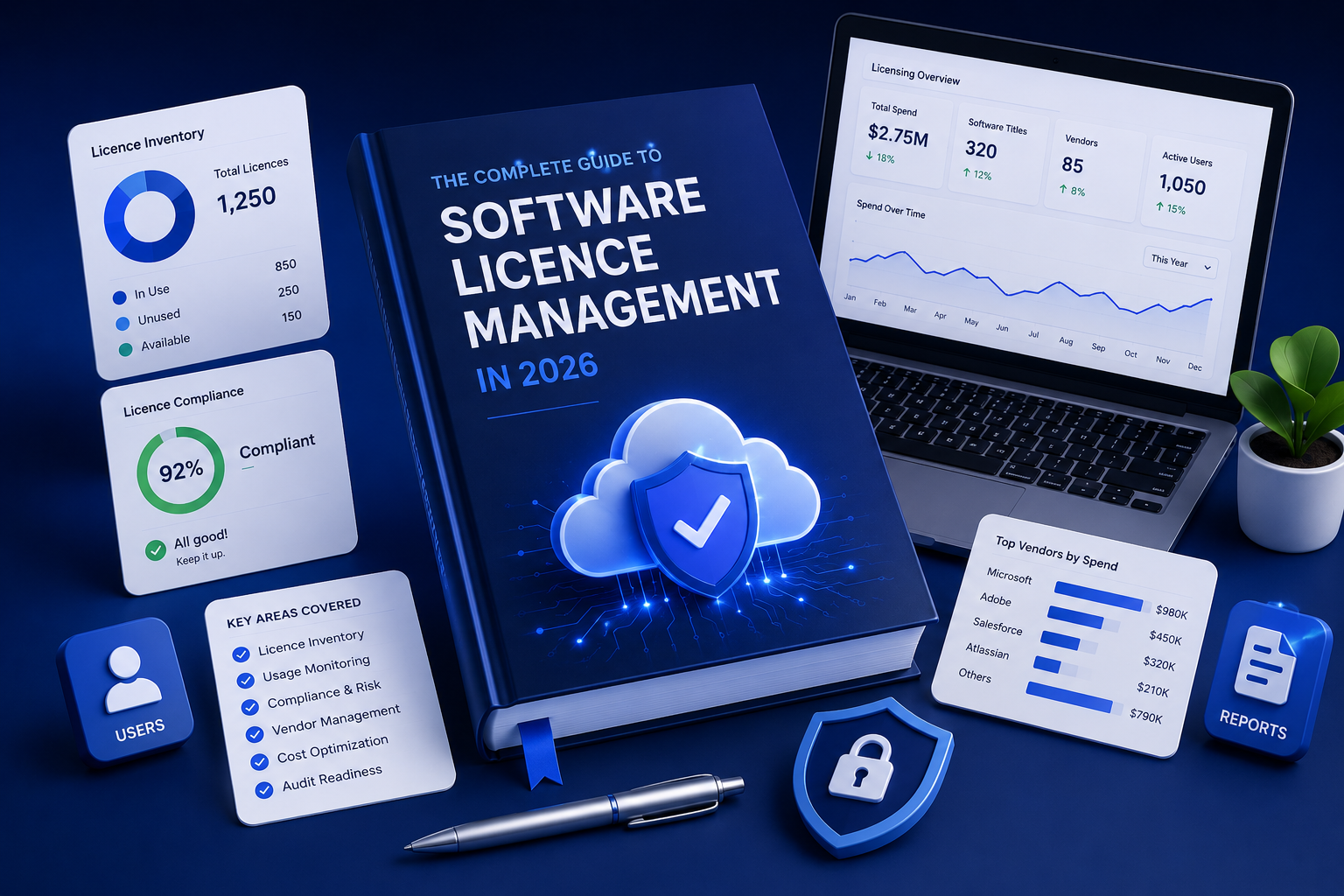
The Complete Guide to Software Licence Management in 2026
Managing software licences at scale is more complex than ever. This comprehensive guide covers everything you need to know — from procurement to compliance to cost optimisation.
What Is Software Licence Management?
Software licence management (SLM) is the process of tracking, controlling, and optimising the software licences an organisation uses. Done well, it ensures legal compliance, reduces waste, and gives IT and finance teams full visibility into software spend.
In 2026, with the average company using over 100 SaaS applications, SLM is no longer optional — it is a core business function.
Why It Matters More Than Ever
Three forces are making SLM more critical:
- SaaS explosion: Every department can buy software independently with a credit card. Purchasing is decentralised and often ungoverned.
- Audit risk: Software vendors are increasing audits. Non-compliance fines can run into hundreds of thousands of dollars.
- Budget pressure: As companies face tighter budgets, software spend is under scrutiny. CFOs want to know what they are paying for and whether it is being used.
Core Components of a Strong SLM Programme
1. Centralised Inventory
You need a single source of truth for every software subscription — what it is, who uses it, how much it costs, and when it renews. Spreadsheets break down past 20–30 tools. Dedicated platforms like SaaSGama scale to thousands.
2. User Assignment Tracking
Every licence should be assigned to a named user. Unassigned licences are waste; over-assigned licences create compliance risk. Automated tracking ensures assignments stay current as people join, move, and leave.
3. Renewal Calendar
Auto-renewals are the enemy of controlled spend. A renewal calendar with 60–90 day advance alerts gives your team time to negotiate, downgrade, or cancel before the invoice hits.
4. Utilisation Monitoring
Tracking whether people are actually using their licences is the fastest way to identify savings. If a user hasn't logged into a tool in 60 days, that licence is a candidate for reclamation.
5. Cost Allocation
Allocating SaaS costs to the departments that use them creates accountability and helps decision-makers evaluate ROI on their software investments.
Implementing SLM: Getting Started
The fastest path to value is a dedicated platform rather than a homegrown spreadsheet system. Modern SLM tools like SaaSGama handle inventory, assignment, renewals, and cost analytics in one place — and typically pay for themselves within the first month through identified savings.