How to Cut SaaS Spend by 40% in 90 Days: A Step-by-Step Playbook
Most companies overspend on SaaS by 30–40% without realising it. Here is the exact playbook our customers use to reclaim that budget in under 90 days.
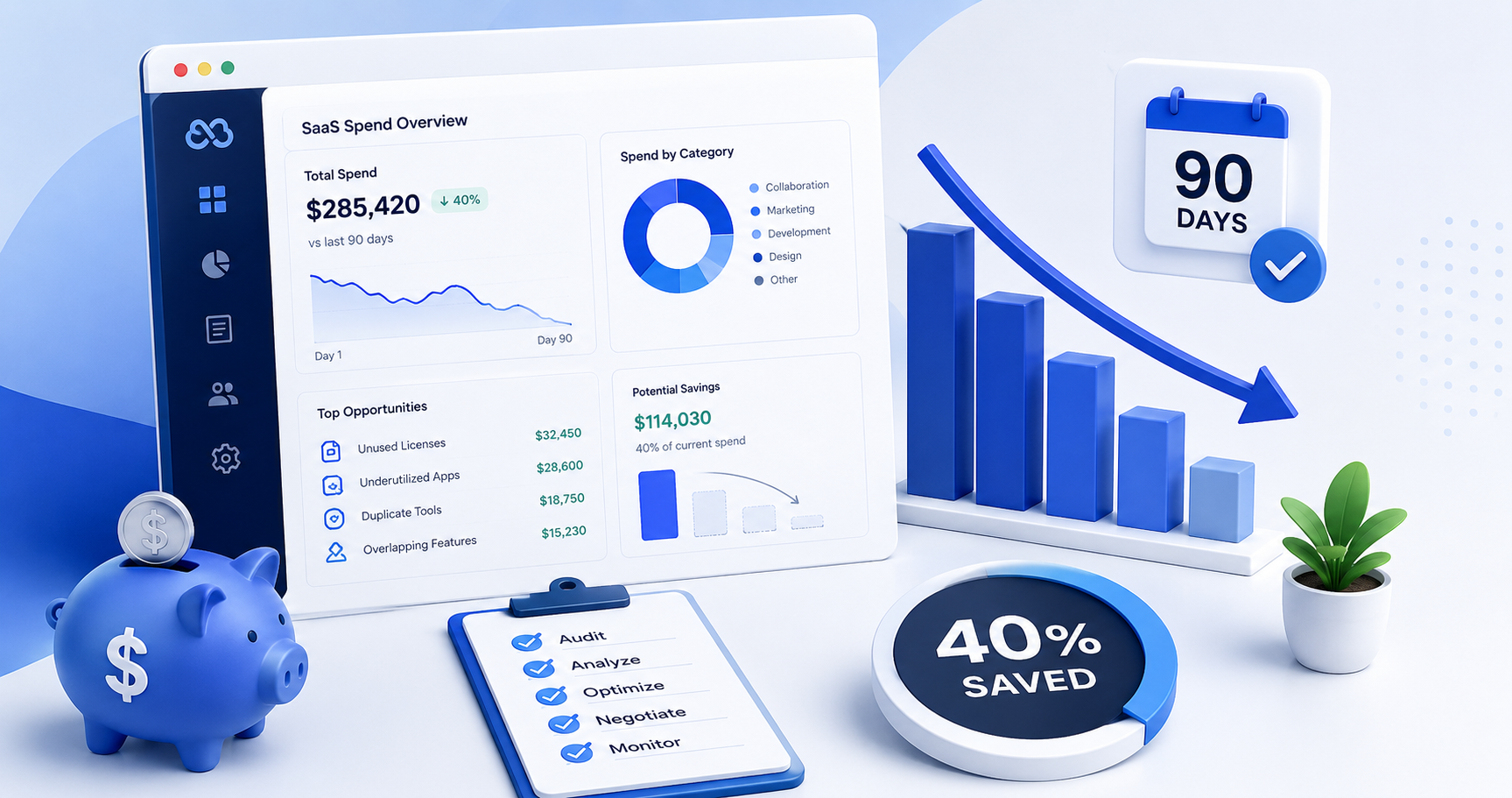
The SaaS Sprawl Problem
The average mid-size company pays for 130 SaaS tools. Fewer than 70% of those licences are used regularly. That gap represents tens — sometimes hundreds — of thousands of dollars in waste every year.
But cutting SaaS spend is not just about cancelling subscriptions. It requires a systematic audit, clear ownership, and the right tooling to keep things clean going forward.
Step 1: Get Full Visibility (Week 1–2)
You cannot cut what you cannot see. Start by pulling a complete inventory of every SaaS tool your company pays for. Include subscriptions on corporate cards, department budgets, and auto-renewals buried in old invoices.
SaaSGama connects to your billing sources and surfaces every active subscription in a single dashboard. Within hours, most teams discover tools they forgot they were paying for.
Step 2: Map Usage to Licences (Week 2–4)
A subscription is only worth keeping if people actually use it. For each tool, map assigned licences to actual users and check usage frequency. SaaSGama tracks assigned seats per employee, making this trivially easy.
Flag any licence where the user has not logged in for 30+ days — those are strong cancellation candidates.
Step 3: Identify Duplicates (Week 3–5)
It is shockingly common to pay for two tools that do the same thing — one chosen by Engineering, another by Marketing, a third by Sales. Map your tool categories and identify where consolidation is possible.
Common duplicates: video conferencing (Zoom + Teams + Google Meet), project management (Jira + Asana + Monday), and document signing (DocuSign + HelloSign).
Step 4: Negotiate Renewals Proactively (Ongoing)
The best time to negotiate a SaaS contract is 60–90 days before renewal, not the day it auto-renews. SaaSGama sends renewal alerts so your team has time to negotiate, downgrade, or cancel before the charge hits.
In our data, customers who negotiate proactively save an average of 22% off list price.
Results
Following this playbook, the average SaaSGama customer identifies $80K–$200K in annual savings within 90 days. The work is front-loaded; the payoff is permanent.