The Hidden Cost of SaaS Waste: How Enterprises Are Bleeding Millions
In the digital transformation era, Software-as-a-Service (SaaS) applications have become the backbone of modern business operations. From productivity suites to specialized tools, organizations rely on an average of 106 SaaS applications to power their daily workflows. However, beneath this digital convenience lies a costly reality that most enterprises are just beginning to understand: SaaS waste is quietly draining millions from corporate budgets. Recent industry analysis reveals a staggering truth—89% of enterprise SaaS contracts are overpriced, and nearly half of all purchased software licenses remain unused within a 90-day period. This translates to an average annual waste of $21 million per enterprise, money that could otherwise fuel innovation, growth, and competitive advantage.
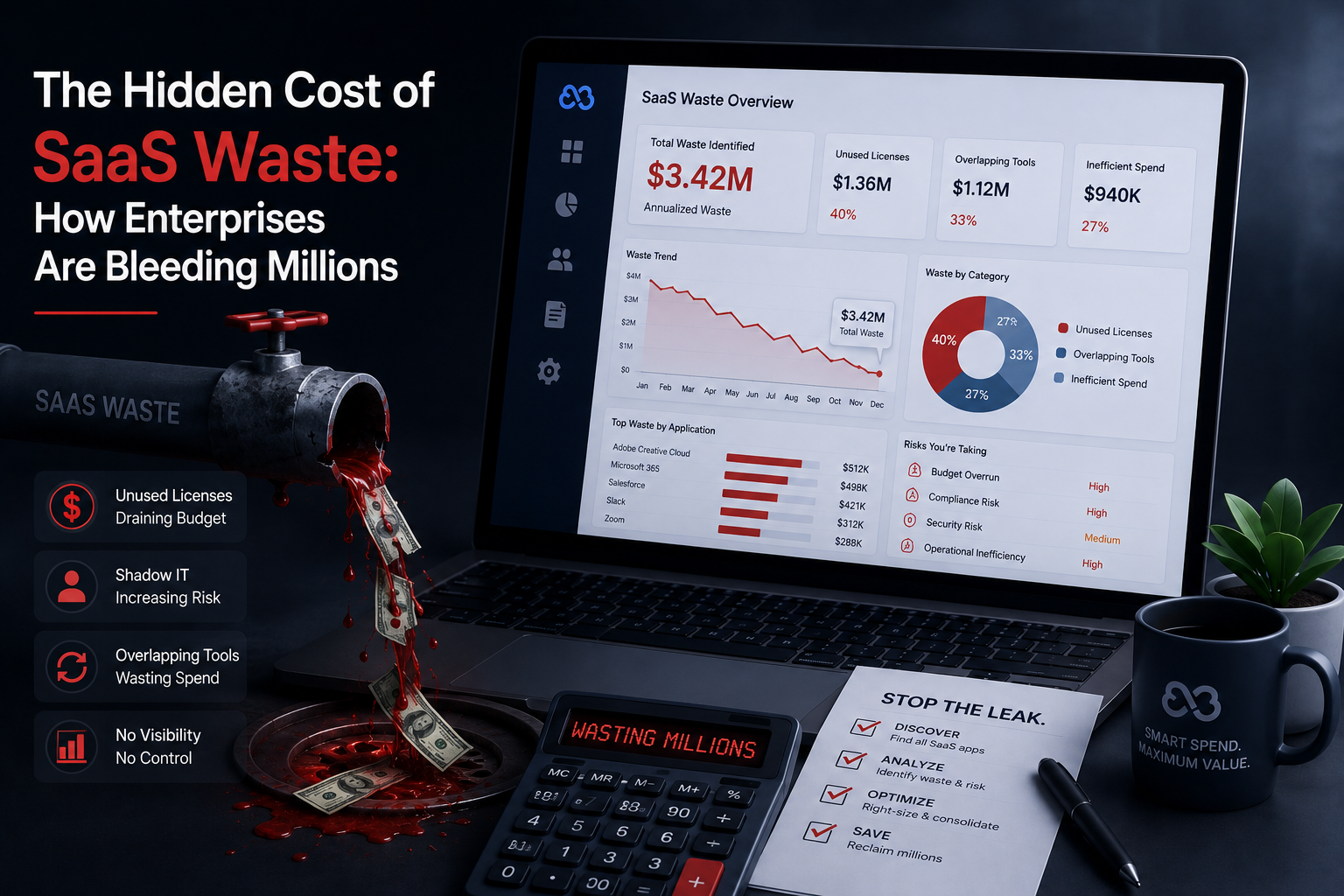
In the digital transformation era, Software-as-a-Service (SaaS) applications have become the backbone of modern business operations. From productivity suites to specialized tools, organizations rely on an average of 106 SaaS applications to power their daily workflows. However, beneath this digital convenience lies a costly reality that most enterprises are just beginning to understand: SaaS waste is quietly draining millions from corporate budgets.
Recent industry analysis reveals a staggering truth—89% of enterprise SaaS contracts are overpriced, and nearly half of all purchased software licenses remain unused within a 90-day period. This translates to an average annual waste of $21 million per enterprise, money that could otherwise fuel innovation, growth, and competitive advantage.
The Anatomy of SaaS Waste
SaaS waste manifests in multiple forms, each contributing to the overall financial drain that organizations experience. Understanding these various sources is crucial for developing effective cost optimization strategies.
Unused and Underutilized Licenses
The most obvious form of waste comes from licenses that employees simply aren't using. A comprehensive analysis by Productiv found that only 47% of SaaS licenses see active usage over a 90-day period. This means that for every $100,000 spent on software licenses, approximately $53,000 goes toward tools that generate zero business value.
This phenomenon occurs for several reasons. Employees may have requested access to specific tools during project phases that have since concluded. Others might have found alternative solutions or workflows that don't require the originally requested software. Additionally, as teams evolve and responsibilities shift, previously essential tools become redundant.
Overlapping Functionality and Redundant Applications
Modern enterprises often suffer from application sprawl, where different departments independently purchase tools that serve similar functions. Marketing might use one project management platform while product development uses another, despite both serving essentially the same purpose. This redundancy creates unnecessary complexity and inflated costs.
Research indicates that companies with over 1,000 employees typically have 15-20% functional overlap in their SaaS portfolio. For a mid-sized organization spending $2 million annually on software, this overlap represents $300,000-$400,000 in potential savings.
Poor Renewal Management
SaaS subscriptions often auto-renew, creating opportunities for continued waste. Without proper tracking mechanisms, organizations frequently renew licenses for departing employees, discontinued projects, or superseded tools. A study by CloudEagle found that 68% of enterprises have no centralized system for tracking renewal dates, leading to surprise charges and missed optimization opportunities.
Inadequate License Right-Sizing
Many organizations purchase higher-tier licenses than necessary, paying for advanced features that teams never utilize. For example, a company might purchase enterprise-level licenses for all users when basic or professional tiers would suffice for 70% of their workforce. This over-provisioning can increase costs by 200-300% compared to optimally sized licensing.
The True Cost of Inaction
The financial impact of SaaS waste extends beyond direct licensing costs. Hidden expenses compound the problem, making the true cost of inaction far more significant than initial calculations suggest.
Operational Overhead
Each unused or redundant application requires administrative overhead. IT teams must maintain user accounts, ensure security compliance, and provide support for tools that deliver no business value. This operational burden diverts resources from strategic initiatives and innovation projects.
Security and Compliance Risks
Unused applications often become security blind spots. Inactive user accounts may retain access permissions, creating potential entry points for malicious actors. Additionally, data scattered across multiple redundant platforms increases compliance complexity and audit costs.
Opportunity Cost
Perhaps most significantly, money wasted on unused software represents lost opportunities. Those millions could fund research and development, employee training, infrastructure improvements, or competitive market expansion. In today's fast-paced business environment, opportunity cost often exceeds direct financial losses.
Industry-Specific Waste Patterns
Different industries exhibit unique SaaS waste patterns based on their operational characteristics and regulatory requirements.
Technology Sector
Technology companies, despite their digital sophistication, often show the highest rates of SaaS proliferation. Development teams frequently experiment with new tools, leading to significant application sprawl. These organizations average 275+ applications and typically waste 32-38% of their software budget.
Financial Services
Financial institutions face unique challenges due to compliance requirements and risk management protocols. They often purchase enterprise licenses for entire organizations when departmental solutions would suffice. Additionally, regulatory tools purchased for specific initiatives often remain active long after projects conclude.
Healthcare Organizations
Healthcare entities frequently maintain multiple systems for different specialties, creating significant overlap in administrative and communication tools. The average healthcare organization wastes approximately 28% of its software budget, with particular waste in productivity and communication applications.
Manufacturing and Industrial
Traditional industries adopting digital transformation often struggle with legacy system integration alongside new SaaS adoption. This creates parallel systems that serve similar functions, with waste rates averaging 25-30% of total software spending.
The Psychology Behind SaaS Waste
Understanding why SaaS waste occurs requires examining the psychological and organizational factors that drive inefficient software purchasing and usage patterns.
The "Just in Case" Mentality
Many procurement decisions stem from fear of missing critical functionality when it's needed. Teams often purchase comprehensive software packages or maintain multiple tool subscriptions "just in case" specific features become necessary. This risk-averse approach significantly contributes to over-provisioning and waste.
Decentralized Purchasing Power
Modern organizations often empower teams with purchasing autonomy, allowing departments to acquire tools without centralized oversight. While this flexibility accelerates innovation, it also creates duplicate purchases and missed consolidation opportunities.
Subscription Fatigue
The ease of SaaS subscription cancellation paradoxically leads to subscription retention. Teams often delay cancellation decisions, assuming they can "deal with it later." This procrastination mentality results in months or years of unnecessary charges for unused services.
Building a Culture of SaaS Accountability
Addressing SaaS waste requires more than just technology solutions; it demands organizational change and cultural shifts that promote accountability and strategic thinking.
Establishing Clear Ownership
Every SaaS application should have a designated business owner responsible for monitoring usage, managing renewals, and justifying continued investment. This accountability ensures that purchasing decisions align with actual business needs rather than speculative requirements.
Implementing Regular Review Cycles
Quarterly or semi-annual reviews should examine usage patterns, evaluate tool effectiveness, and identify consolidation opportunities. These reviews should involve both technical teams and business stakeholders to ensure comprehensive evaluation.
Creating Shared Visibility
Transparency around software costs and usage patterns helps teams make informed decisions. When employees understand the financial impact of their tool choices, they naturally become more conscious of waste and optimization opportunities.
The Role of Automation in Waste Prevention
Modern SaaS management platforms leverage automation to proactively prevent waste rather than merely identifying it after it occurs.
Intelligent Usage Monitoring
Advanced platforms continuously monitor user engagement patterns, automatically flagging accounts with declining usage before they become completely inactive. This early warning system enables proactive intervention and optimization.
Automated Right-Sizing Recommendations
AI-powered analysis can identify users who consistently underutilize advanced features, automatically recommending license downgrades that maintain functionality while reducing costs.
Predictive Renewal Management
Machine learning algorithms can analyze historical usage patterns to predict which renewals are likely unnecessary, enabling proactive cancellation or renegotiation.
Looking Forward: The Future of SaaS Cost Management
As SaaS adoption continues accelerating, waste management will become increasingly sophisticated and essential for maintaining competitive advantage.
Integration with Business Intelligence
Future SaaS management solutions will integrate more deeply with business intelligence platforms, providing comprehensive ROI analysis that connects software investments directly to business outcomes and revenue generation.
Enhanced Vendor Collaboration
Software vendors are beginning to offer more flexible licensing models and built-in optimization tools, recognizing that customer success depends on efficient resource utilization rather than maximum license sales.
Regulatory and Compliance Evolution
As SaaS adoption matures, regulatory frameworks will likely develop around software asset management, particularly in industries with strict financial oversight requirements.
Conclusion: The Imperative for Action
SaaS waste represents one of the most significant yet addressable inefficiencies in modern enterprise operations. With average waste rates exceeding 40% of software budgets, organizations can literally double their software ROI through systematic optimization efforts.
The path forward requires combining technological solutions with organizational discipline. Companies that implement comprehensive SaaS management strategies today will gain significant competitive advantages through improved cost efficiency, reduced operational complexity, and enhanced resource allocation for strategic initiatives.
For executives and IT leaders, the question isn't whether their organization suffers from SaaS waste—industry data confirms it almost certainly does. The crucial question is how quickly they can implement solutions to recapture those millions in wasted spending and redirect them toward growth and innovation.
The hidden cost of SaaS waste is no longer hidden. It's time to take action.
*Ready to uncover your organization's SaaS waste? Start your free 14-day trial with SaaSGama and discover how much you could save with intelligent license management and automated cost optimization.*